FULL-STACK WEB APP | 2026
Lyricfy-JP
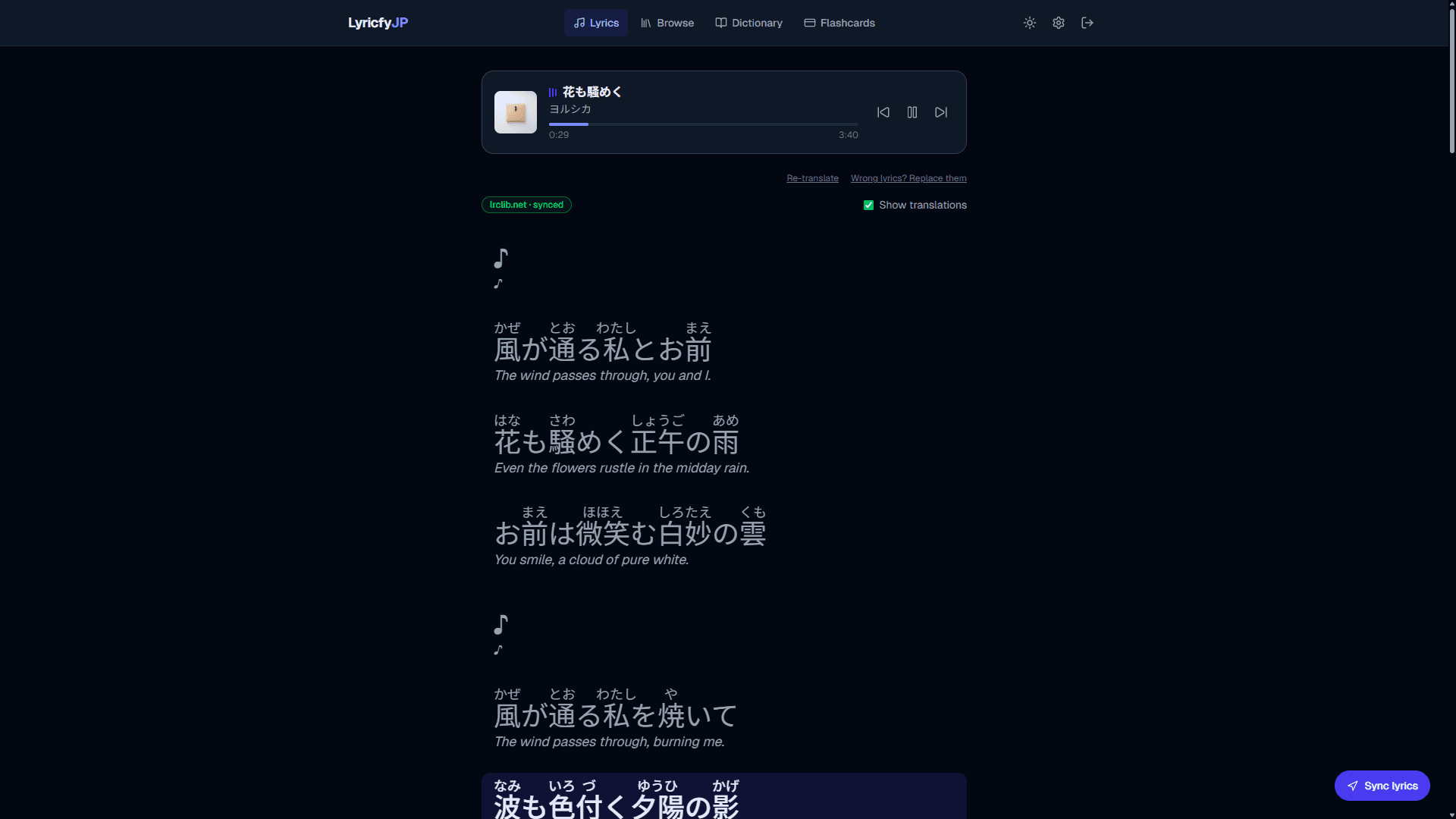
A Japanese learning app that turns your Spotify library into a classroom — displaying real-time synced lyrics with furigana and English translations, letting you capture vocabulary mid-song and drill it later with flashcards.
OVERVIEW
IMPLEMENTATION
TECH STACK
Framework
Next.js
Language
TypeScript
Backend
Supabase
AI
Google Gemini 2.0 Flash via OpenRouter, Claude Code
Styling
Tailwind CSS
APIs
Spotify Web API, lrclib.net
Deployment
Vercel
FEATURES
Real-time lyrics synced to Spotify playback
Furigana and English translation overlay
AI-powered vocabulary capture — highlight any phrase to get readings, translations, and example sentences
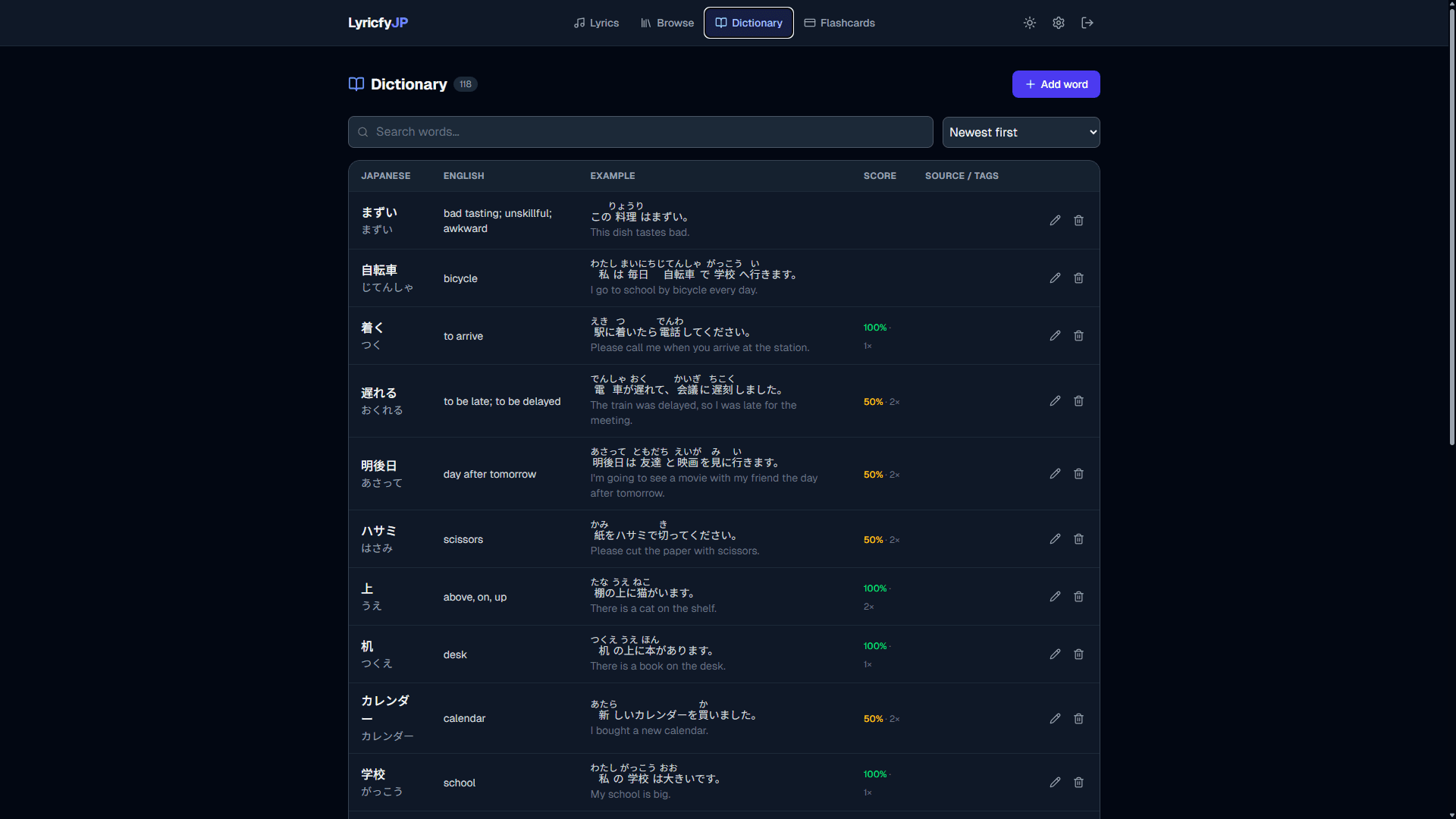
Personal dictionary with search, tagging, and sort by success rate or date
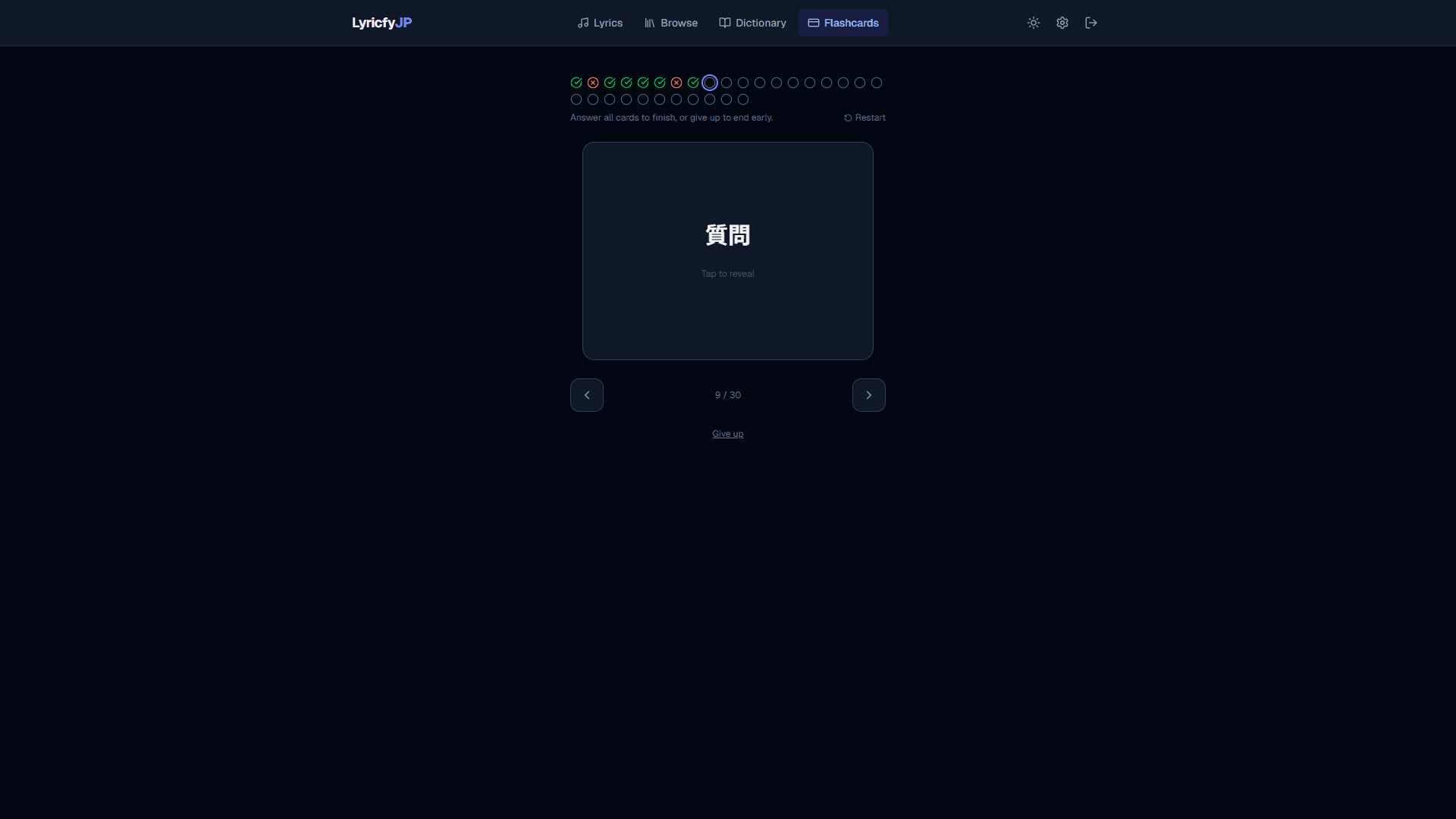
Spaced repetition flashcard quizzes (JP→EN and EN→JP modes)
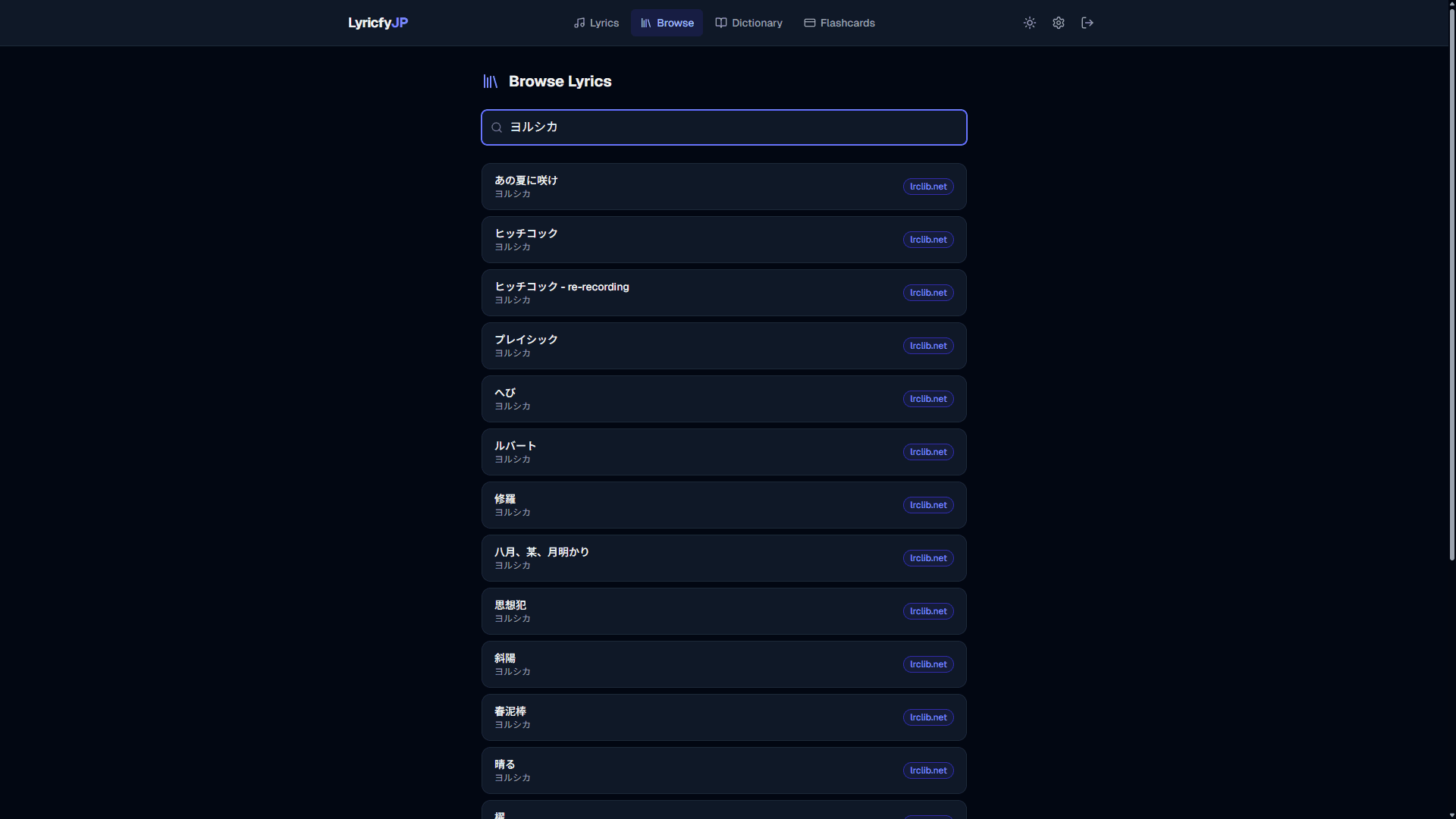
Library browsing without active playback
CHALLENGES & SOLUTIONS
Instruction overload degrading output quality
Learned to start with a broad direction and layer in specifics incrementally across iterations, rather than front-loading all requirements at once. Claude Code follows instructions more reliably when each prompt has a narrow, well-defined scope.
Higher-than-expected token usage
Discovered that effective AI-assisted development demands upfront planning — vague intent gets expensive fast. Mapping out features and data flow before implementation reduced wasted back-and-forth and helped stay within a limited token budget.
Knowing when to stop prompting and intervene manually
Maintained active code literacy throughout the build so that when Claude Code stalled on a bug, I could identify and fix it directly rather than burning tokens on diminishing prompts. Over-delegating without understanding the codebase creates both technical debt and token waste.
Inconsistent AI output format breaking UI parsing
Worked through the inconsistency with Claude Code iteratively — describing the format failures I was seeing and letting it propose and refine the fix. This reinforced a key pattern: when AI-generated output is unreliable, the solution is often better enforced at the code level rather than purely through tighter prompting.