FRONTEND WEB APP | 2026
Weather Now
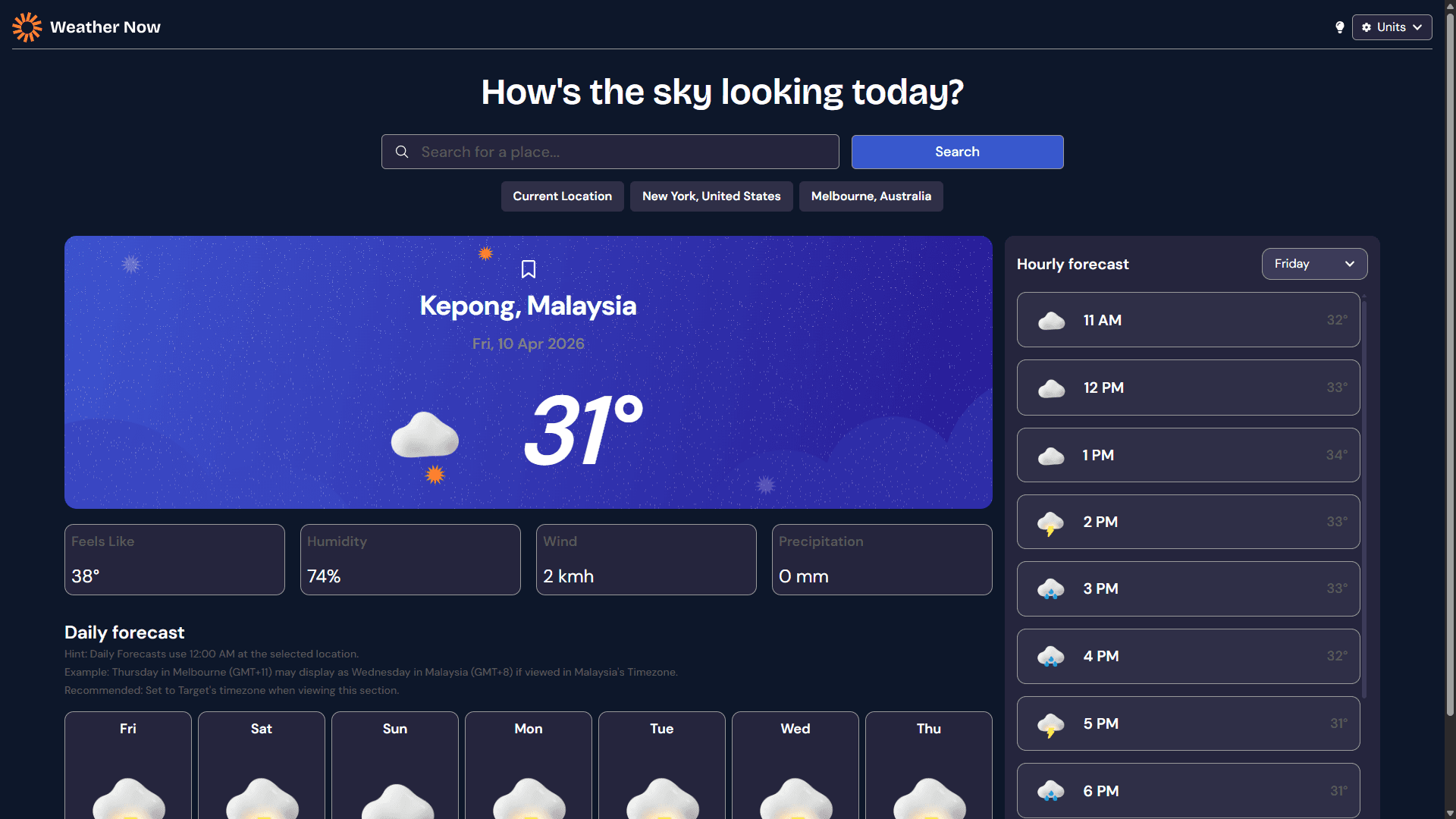
A clean, responsive weather app with real-time conditions, 7-day forecasts, and hourly breakdowns — with automatic geolocation, bookmarkable locations, unit switching, and dark mode support.
OVERVIEW
IMPLEMENTATION
TECH STACK
Framework
React, Vite
Language
TypeScript
Styling
Tailwind CSS
API
Open-Meteo
Deployment
Render
FEATURES
Current weather conditions with real-time data
7-day daily forecast and hourly breakdown
Automatic geolocation on page load
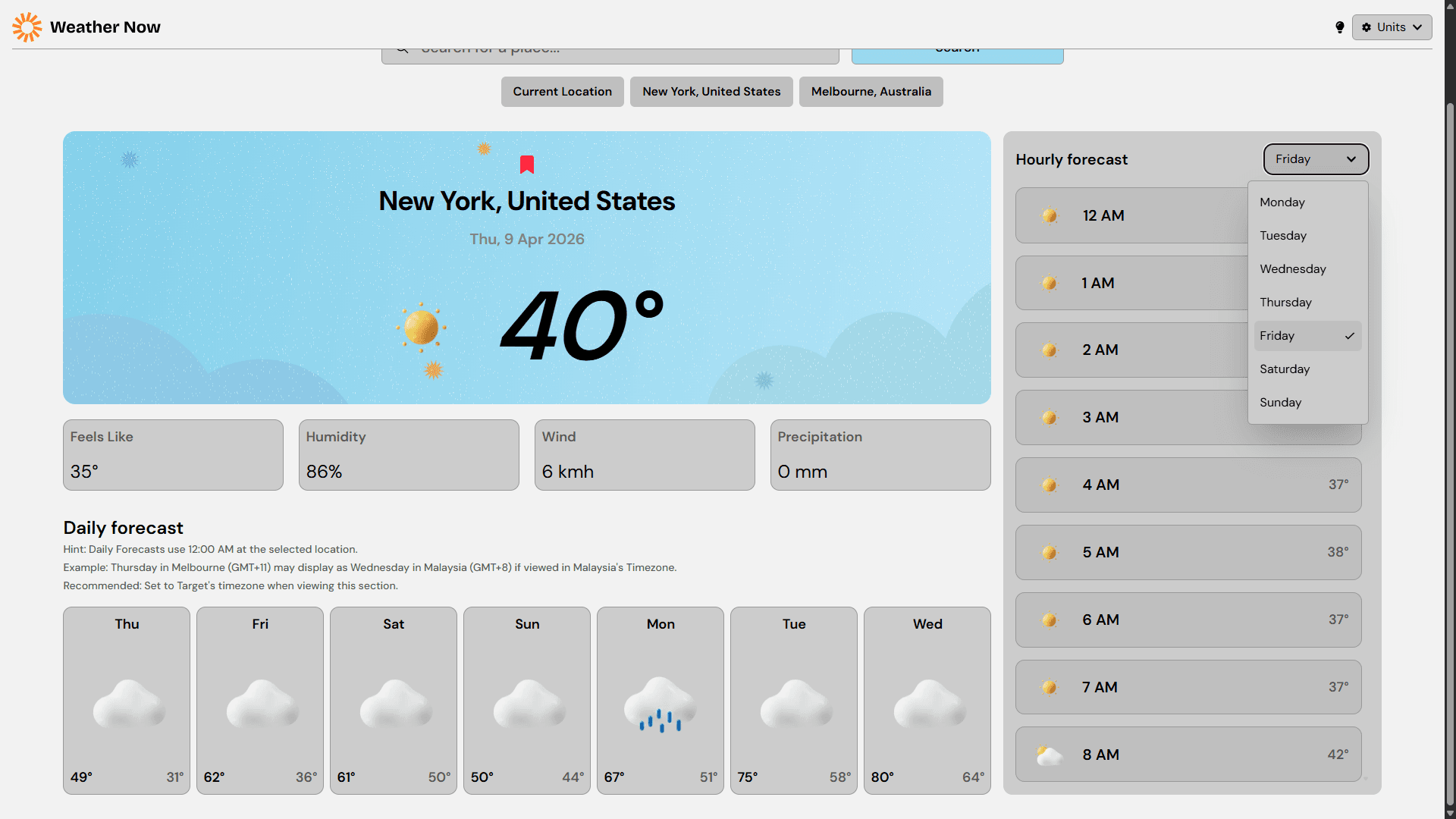
Bookmarkable locations for quick access
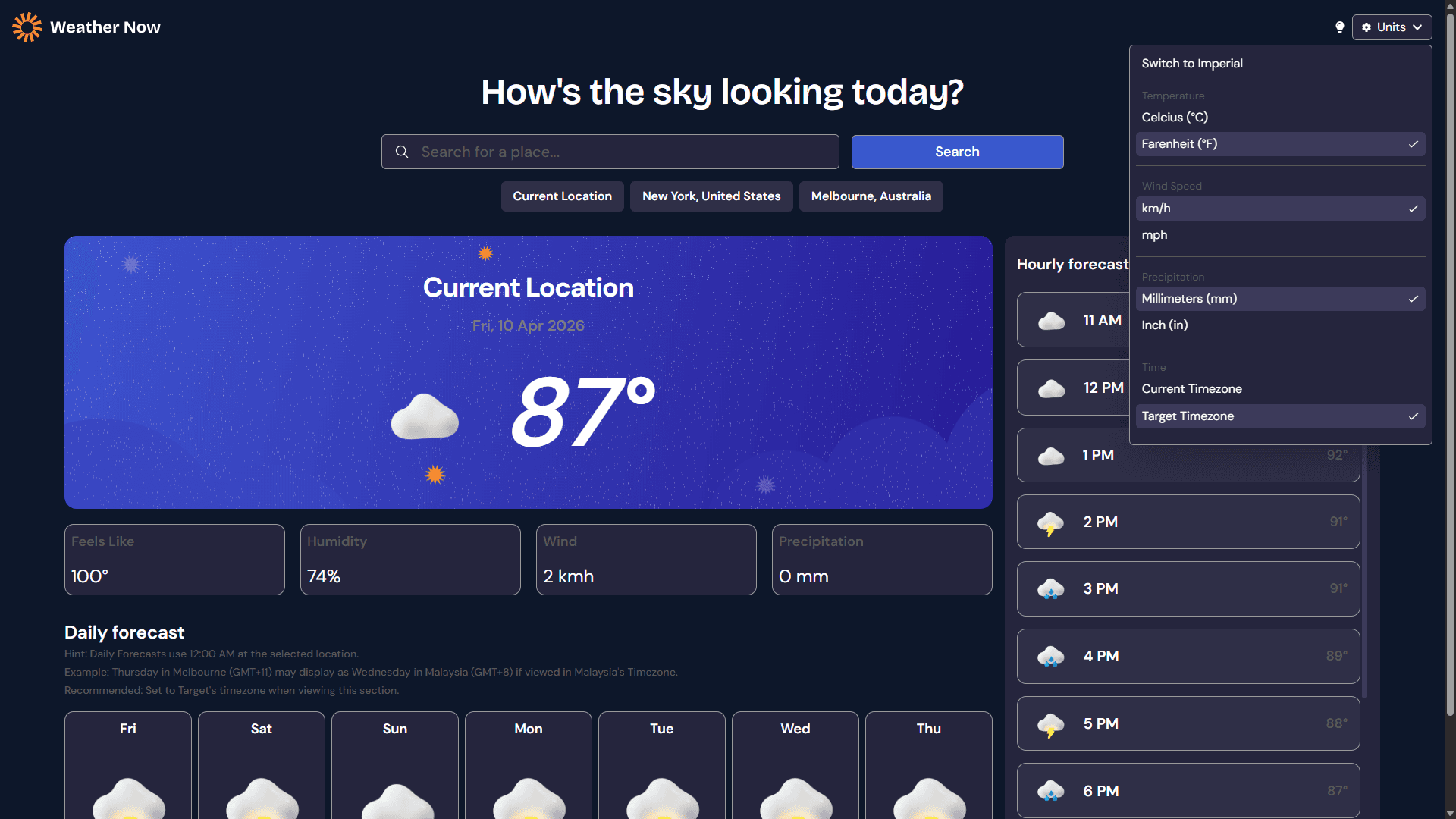
Metric and imperial unit toggle
Timezone-aware time display per location
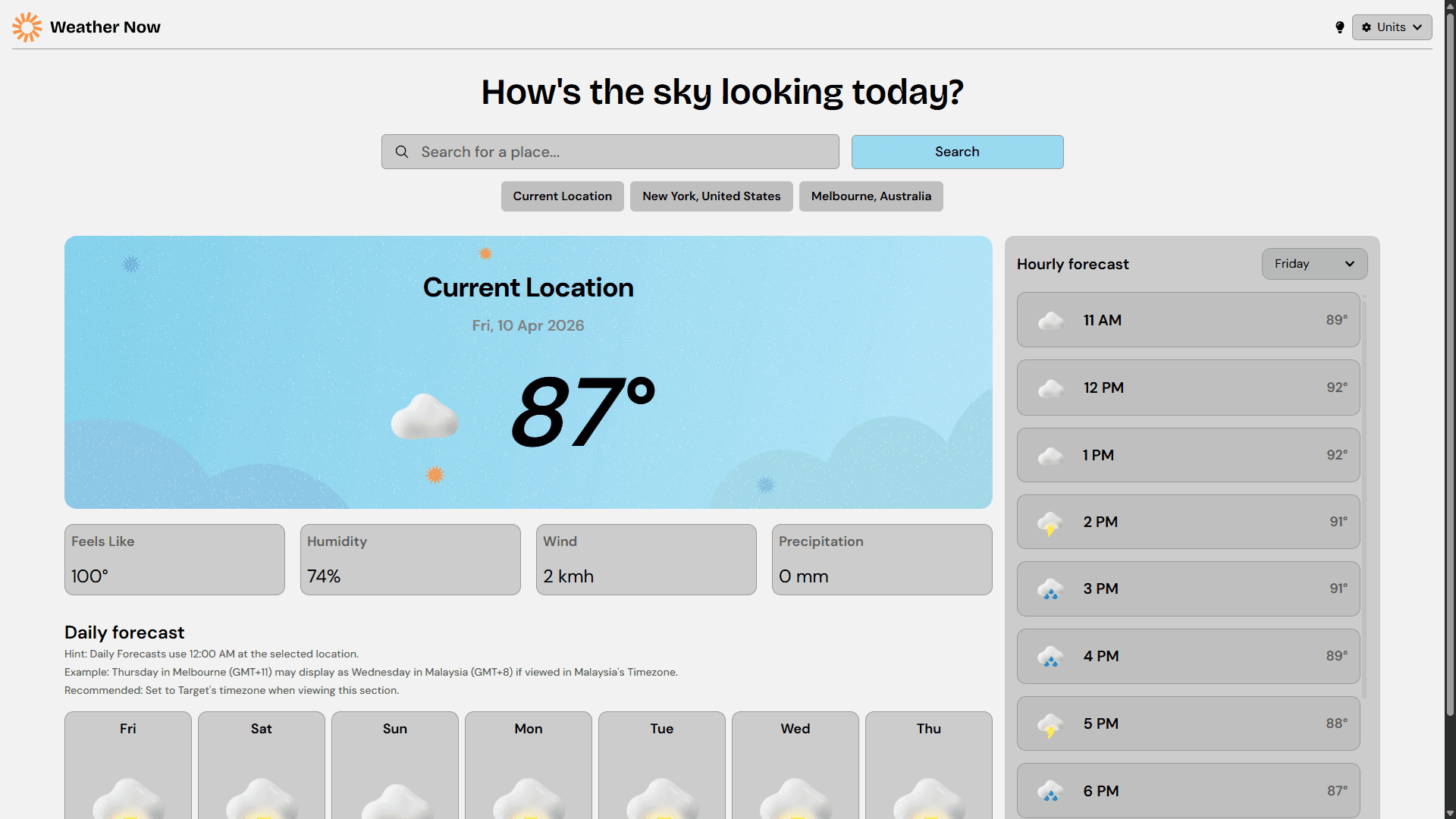
Dark and light mode
Fully responsive layout
CHALLENGES & SOLUTIONS
Geolocation API incompatibility with async/await
The browser Geolocation API is callback-based and does not return a Promise, making it incompatible with async/await out of the box. Wrapped it in a custom Promise to normalise the interface and allow it to integrate cleanly with the rest of the async data-fetching logic.
Timezone mismatch between browser and server environments
JavaScript's Date object behaves differently depending on the runtime — browsers convert to the local system timezone automatically, while Node.js defaults to GMT+0. Handled this explicitly by passing timezone identifiers from the API response into date formatting calls, ensuring displayed times always reflect the target location rather than the user's machine.
Typed error handling in async flows
Used TypeScript union types with useActionState() to model both success and error states explicitly, and applied instanceof checks when catching exceptions to safely narrow error types — avoiding the pitfall of treating all caught values as Error objects.