FRONTEND WEB APP | 2026
Quizzical
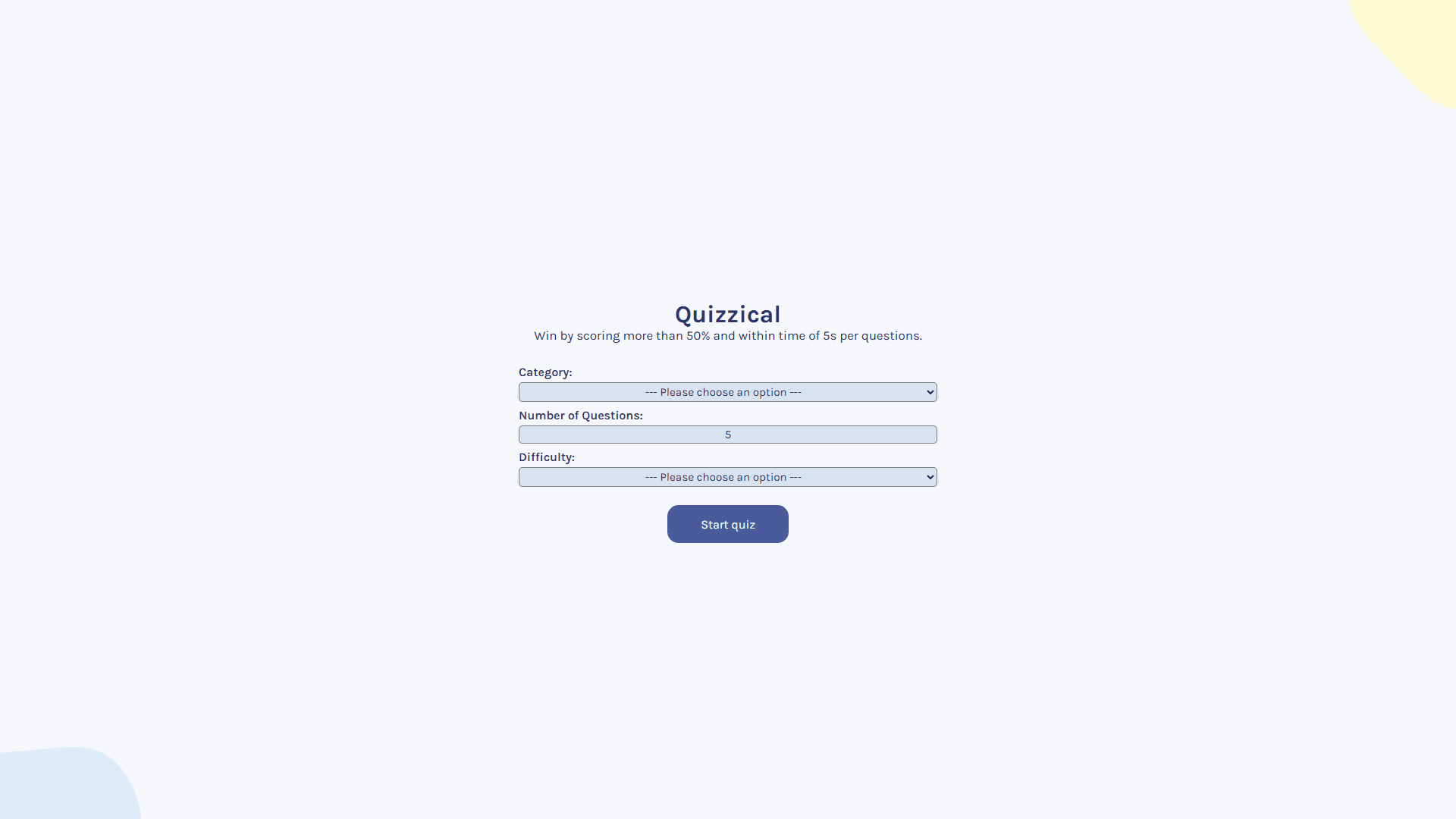
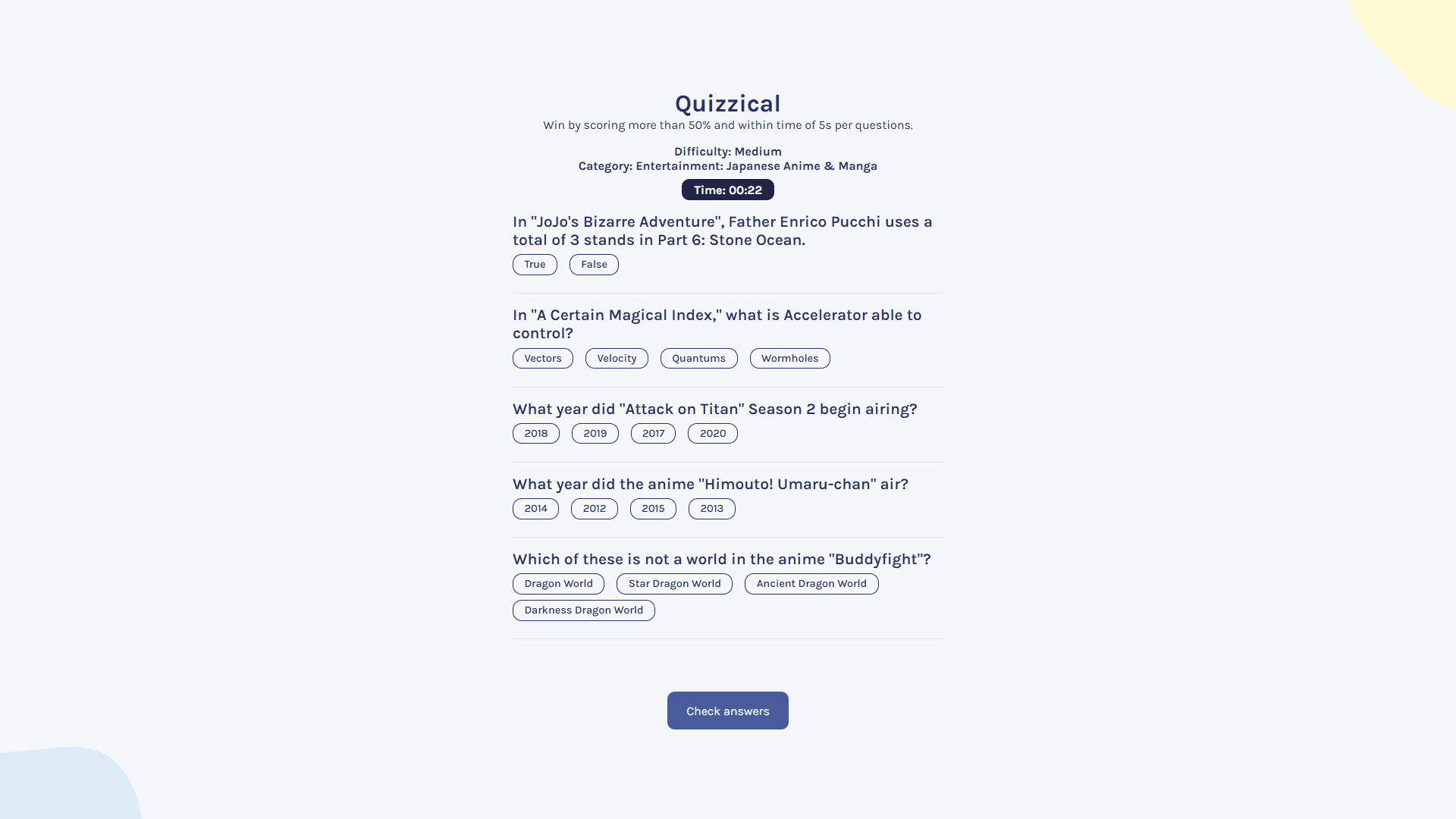
A trivia quiz app powered by the Open Trivia Database — pick your category, difficulty, and question count, then race against a countdown timer to score above 50% and win.
OVERVIEW
IMPLEMENTATION
TECH STACK
Framework
React, Vite
Language
JavaScript
Styling
CSS
Api
Open Trivia Database
Deployment
Render
FEATURES
Configurable quiz setup — category, difficulty, and question count
5-second countdown timer per question with auto-submit on expiry
Randomised answer order for each question
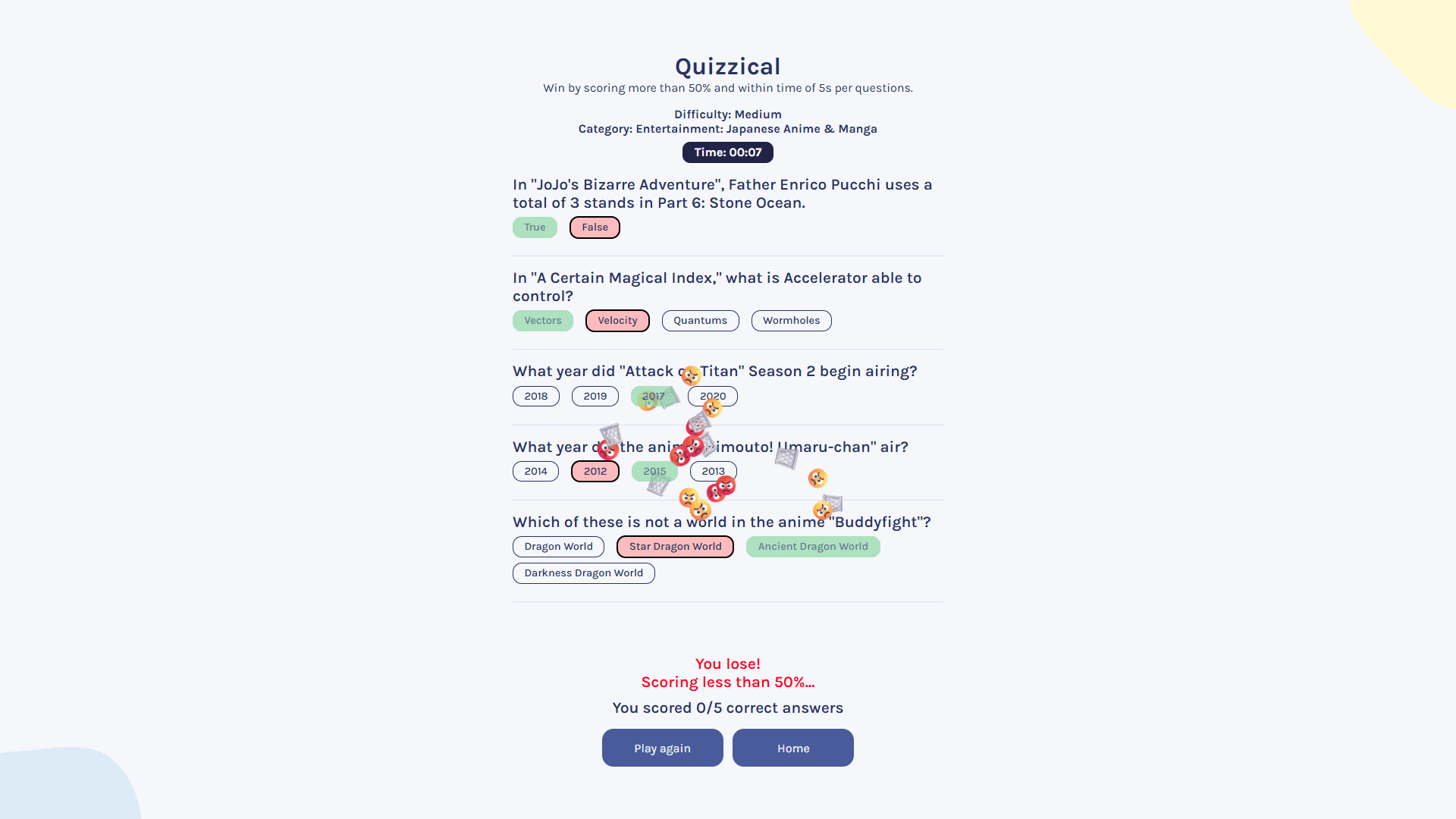
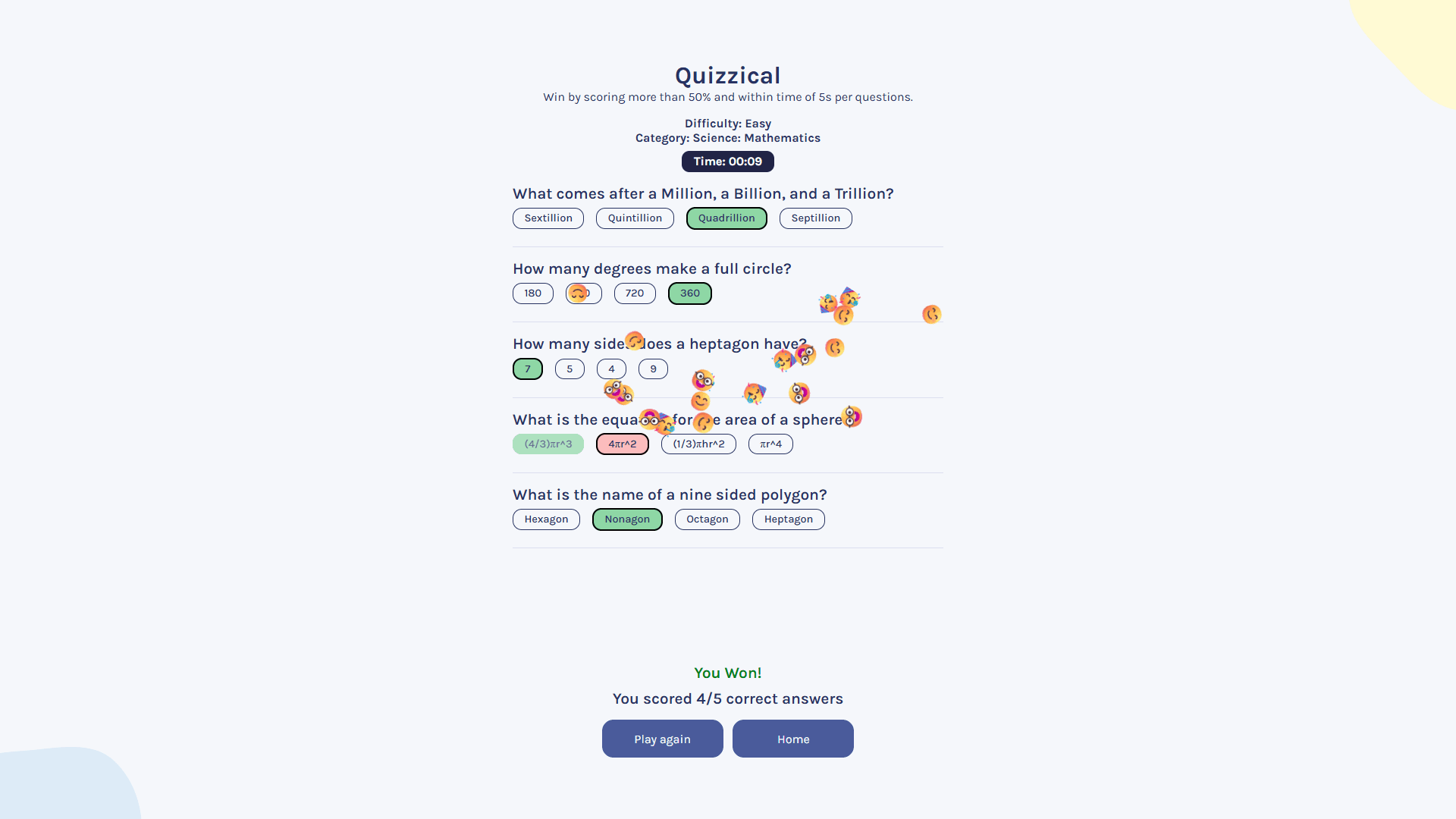
Win/loss detection with confetti animation
Visual correct/incorrect feedback after each answer
API error handling for invalid or exhausted question pools
CHALLENGES & SOLUTIONS
Auto-submitting answers when the timer expires
Used a useEffect with a setInterval countdown tied to the selected answer state. When the interval reaches zero, it programmatically triggers the same submit handler used for manual answers — ensuring identical scoring logic regardless of how the question was completed.
Shuffling answers without breaking True/False questions
Multiple-choice answers are shuffled by randomly sorting all options, but boolean questions must always display as "True" and "False" in a fixed order. Added a question type check before shuffling to skip randomisation for boolean questions entirely.
API response data containing HTML entities
The Open Trivia Database returns question text and answers as HTML-encoded strings (e.g. &, '). Used the html-entities library to decode all API responses before storing them in state, preventing raw entity strings from rendering in the UI.