ENGINEERING GROUP PROJECT | 2024
Revolutionizing Transportation: A Passenger-Carrying Drone
A two-track engineering project that designed a full-scale passenger eVTOL drone on paper and built a scaled-down hexacopter prototype from scratch — validating flight physics, control systems, and structural design through real-world testing.
OVERVIEW
IMPLEMENTATION
TECH STACK
Simulation
MATLAB Simulink
Modelling
SolidWorks
Flight controller
Pixhawk 2.4.8, ArduPilot firmware
Ground control
Mission Planner
Frame
F550 hexacopter
Propulsion
A2216 880KV BLDC motors, Hobbywing Skywalker 30A ESC
Power
3S 10000mAh 30C LiPo battery
RC link
Jumper T-Lite V2 transmitter (ExpressLRS 2.4GHz), Radiomaster RP1 V2 receiver
Telemetry
Holybro Telemetry Radio V3 (433MHz)
Manufacturing
3D printing (PLA)
FEATURES
Full-scale passenger eVTOL paper design — 160 kg payload capacity, hexacopter configuration for motor redundancy
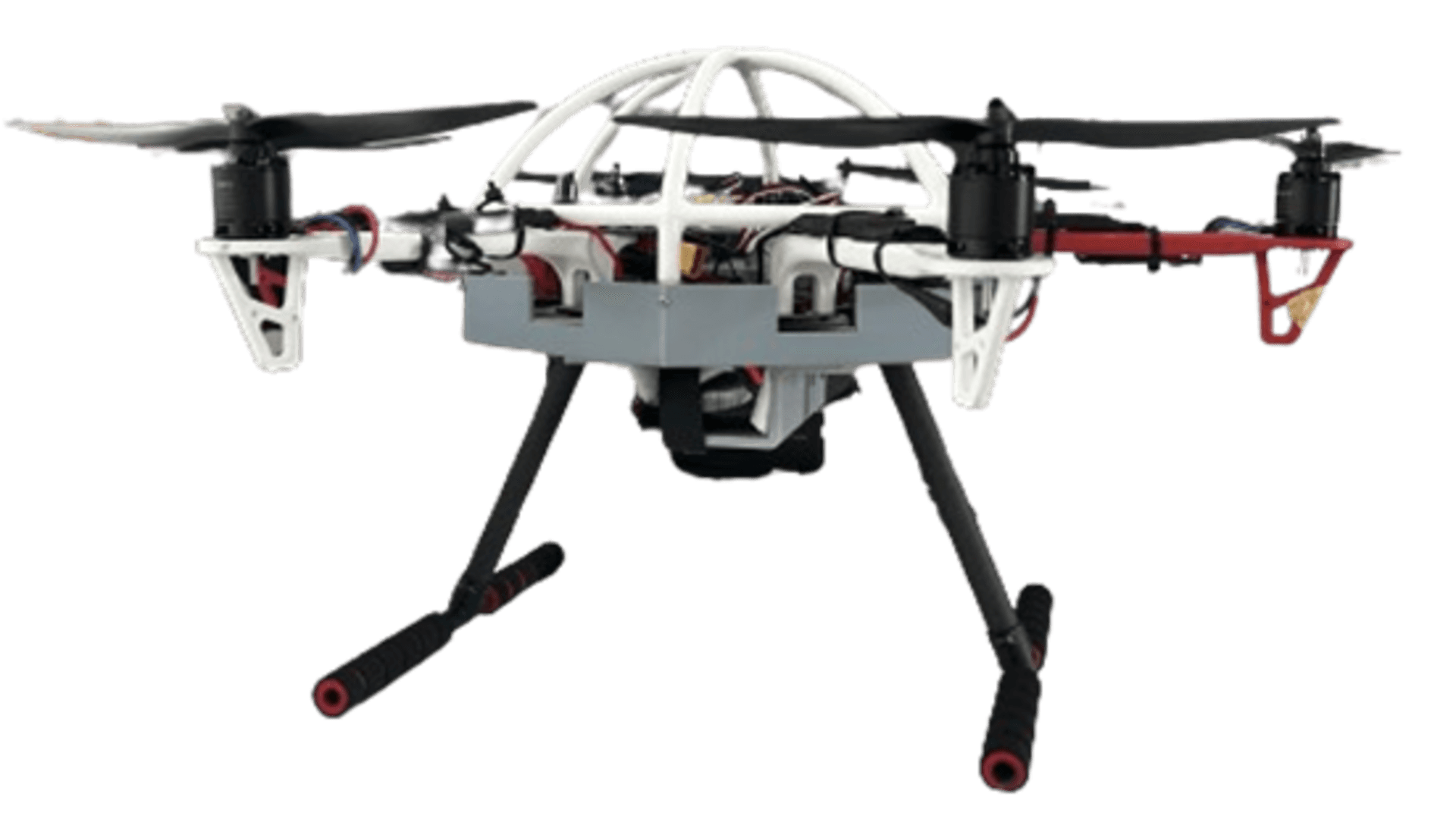
Scaled-down F550 hexacopter prototype — 72:1 mass ratio to passenger drone, built and flight-tested
MATLAB Simulink 3D digital twin — CoG analysis and flight stability simulation before physical build
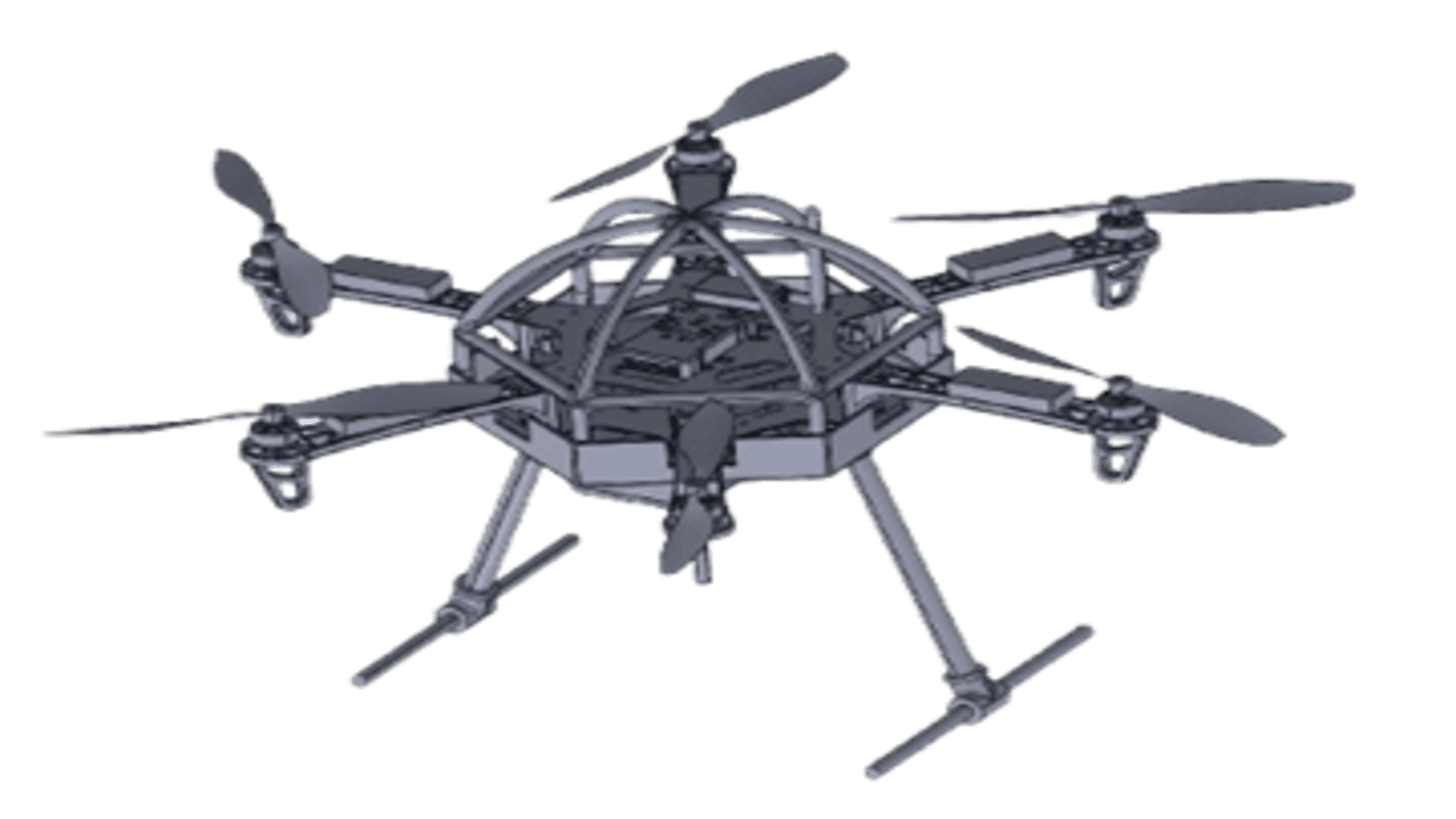
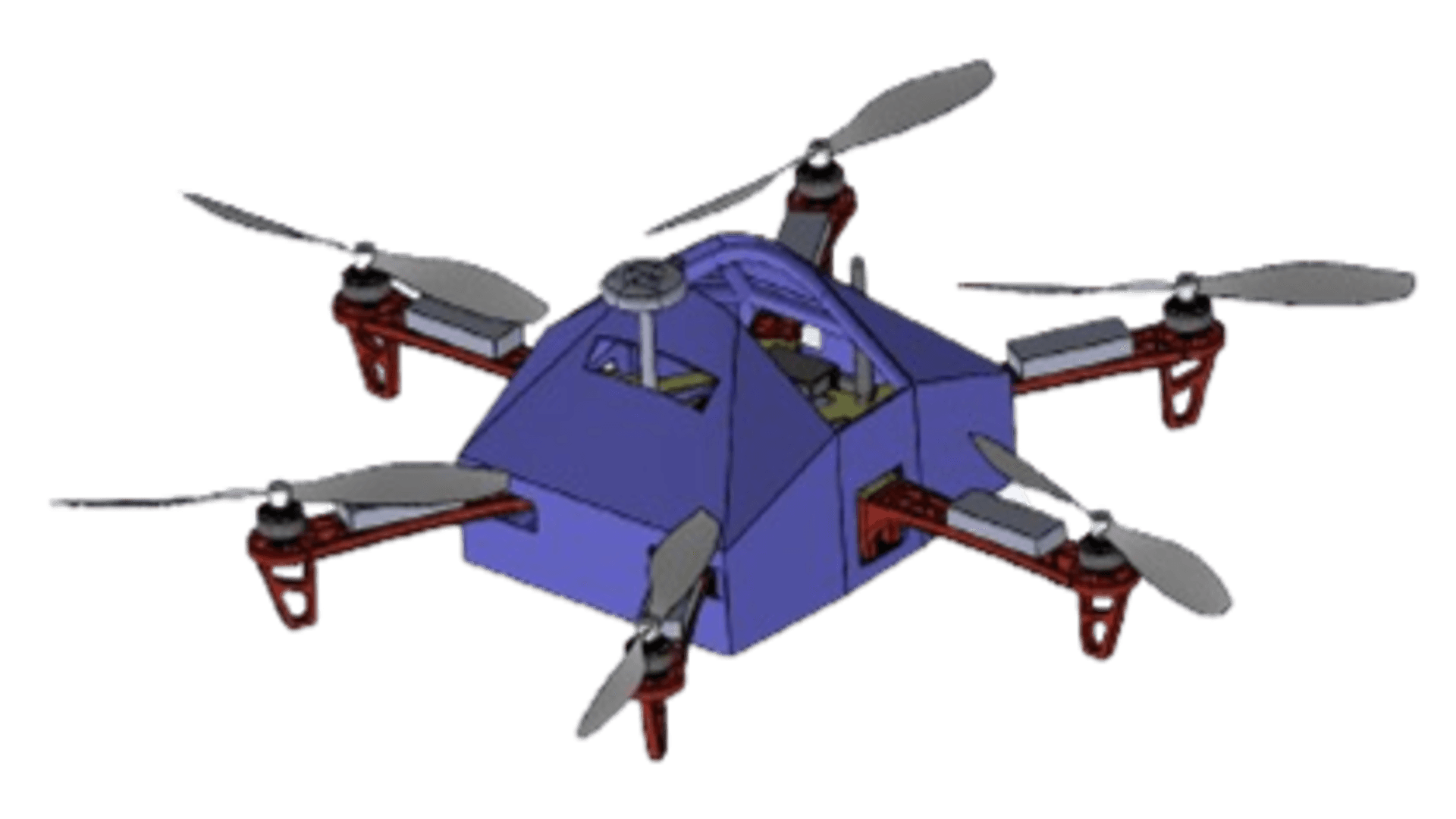
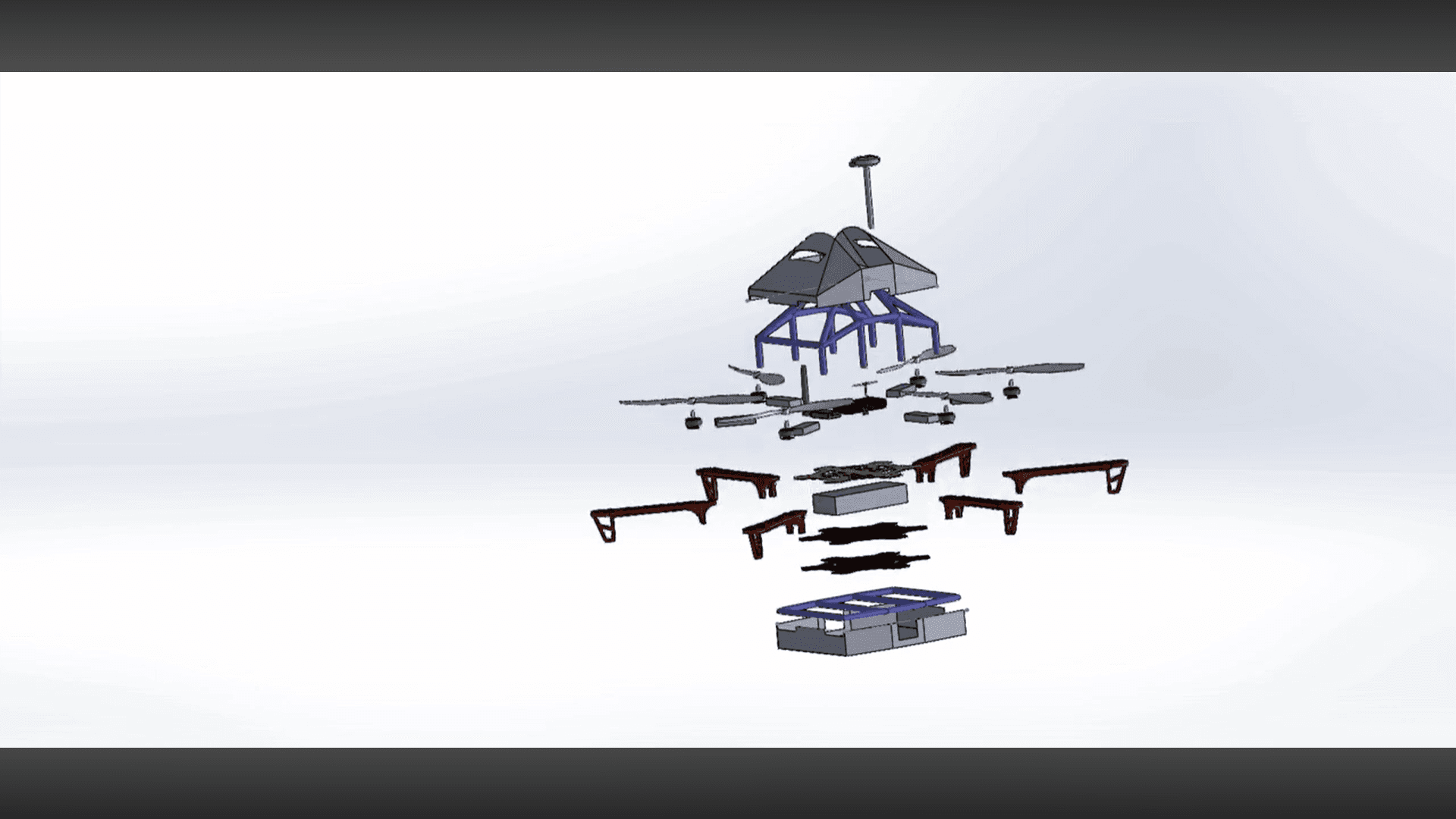
SolidWorks 3D modelling of both drone configurations, imported directly into Simulink
Pixhawk 2.4.8 + ArduPilot flight controller with 5-condition failsafe system (radio, battery, GCS, EKF, vibration)
CRSF-to-PWM protocol bridging via ArduPilot firmware parameter configuration
Holybro 433 MHz telemetry link for real-time ground control during flight
3D-printed aerodynamic housing designed in collaboration with a partnered ME team
Flight endurance test achieving 15.27 min hover — 8.7% deviation from calculated 16.73 min estimate
CHALLENGES & SOLUTIONS
Centre of gravity imbalance in original custom frame
The initial custom frame design failed CoG analysis in MATLAB Simulink — the forward-heavy mass distribution caused a forward flip during simulation. Differential motor speed compensation was applied as a workaround, but this introduced unintended yaw rotation. The root cause was resolved by switching to the F550 hexacopter frame, whose symmetric arm geometry naturally centred the payload and eliminated both issues without software compensation.
RC protocol incompatibility between transmitter and flight controller
The Jumper T-Lite V2 transmitter uses the CRSF protocol, while the Pixhawk 2.4.8 flight controller expects PWM input. Direct connection produced no response. The fix was applying ArduPilot's built-in CRSF protocol bridge — by configuring the correct serial port parameters in the firmware (SERIAL_BAUD and SERIAL_PROTOCOL settings), ArduPilot translated incoming CRSF signals to PWM outputs, restoring full RC control without any additional hardware.
GPS magnetic interference and persistent signal loss
The GPS module suffered persistent magnetic interference from the ESCs and power distribution board, causing unreliable lock and compass errors throughout testing. Elevating the GPS on a dedicated mast provided partial relief by increasing distance from interference sources, but lock quality remained inconsistent. RTL (Return-to-Launch) failsafe mode was disabled as a result — GPS-dependent autonomous flight was deemed unreliable for safe failsafe operation, and all failsafe conditions defaulted to Land mode instead.