CLUB PROJECT | 2022
Food and Beverage Robot
A robotics system that automates burger assembly end-to-end — customers pick their ingredients via a mobile app, and a network of Arduino-controlled stations guided by a robotic arm builds the burger without any human intervention.
OVERVIEW
IMPLEMENTATION
TECH STACK
Microcontroller
Arduino Uno (per station), Raspberry Pi (central coordinator)
Communication
I2C (inter-Arduino), Serial (RPi ↔ Arduino)
Actuation
28BYJ-48 Stepper Motor, SG90 Servo Motor, NEMA Stepper Motor
Hardware
Laser-cut wooden structure
Software
Arduino C/C++, Python (Raspberry Pi)
Interface
Mobile app (order input)
FEATURES
Mobile app ordering with up to 5 customisable ingredients
Raspberry Pi central coordinator for assembly sequencing
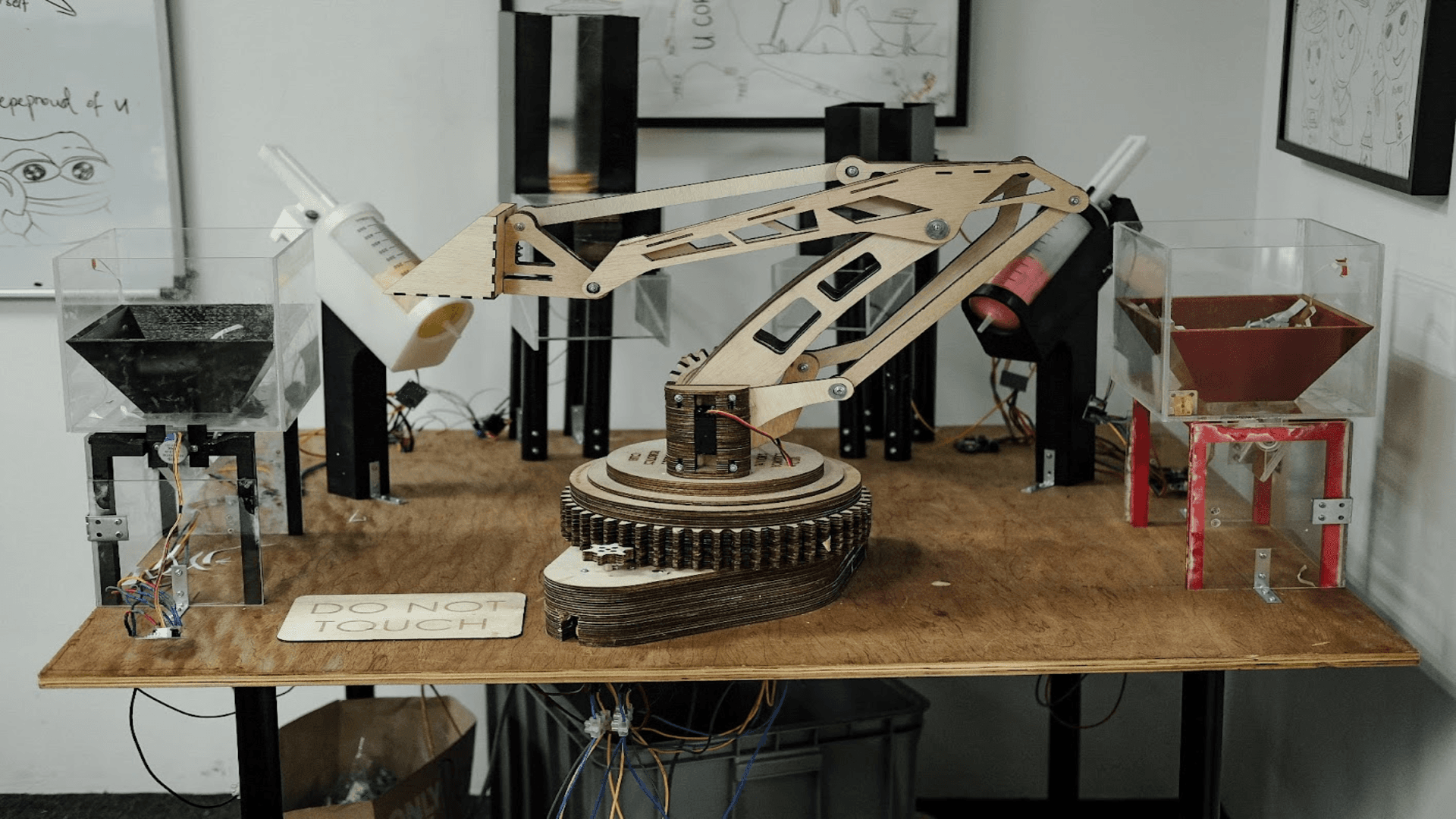
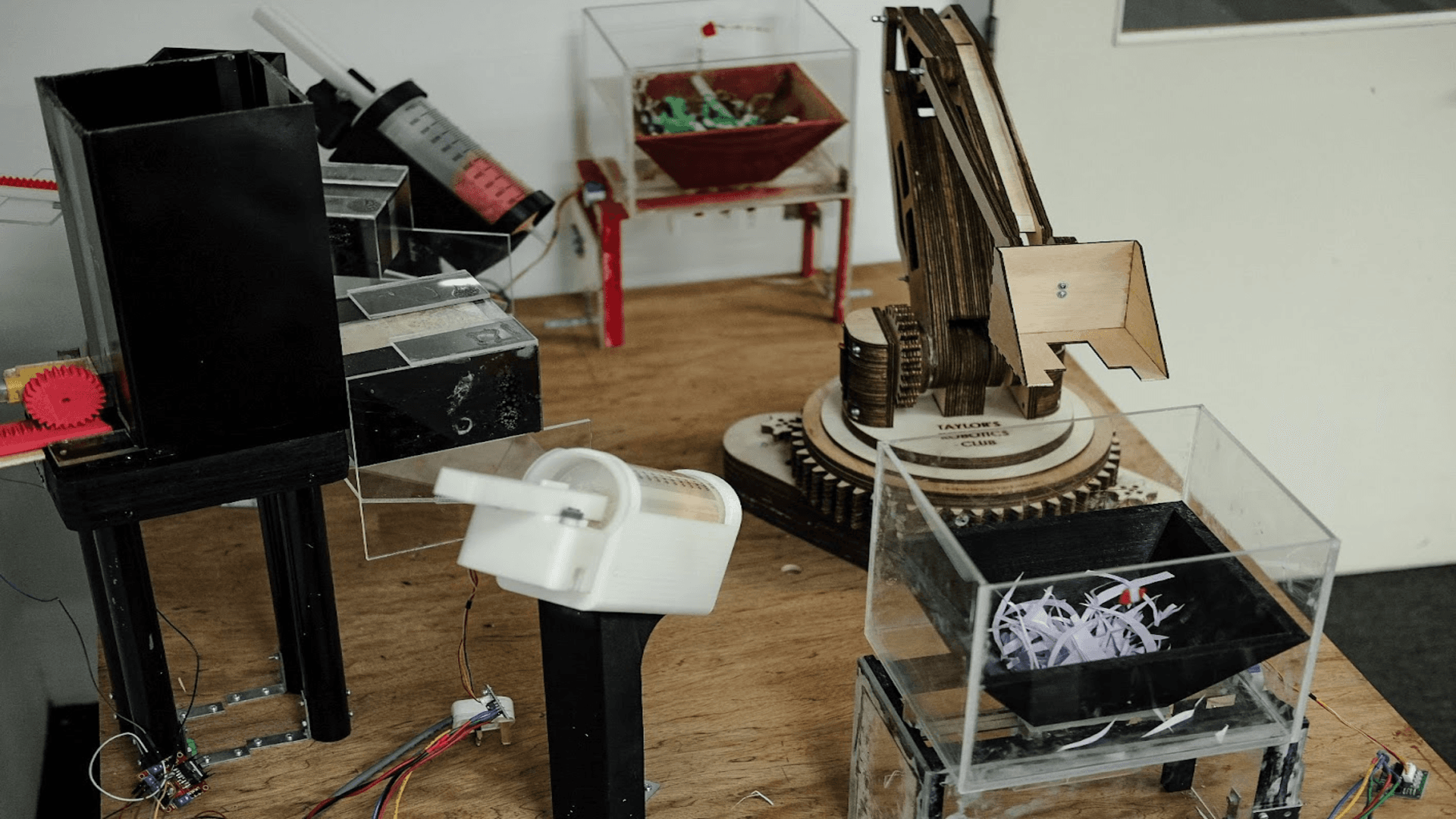
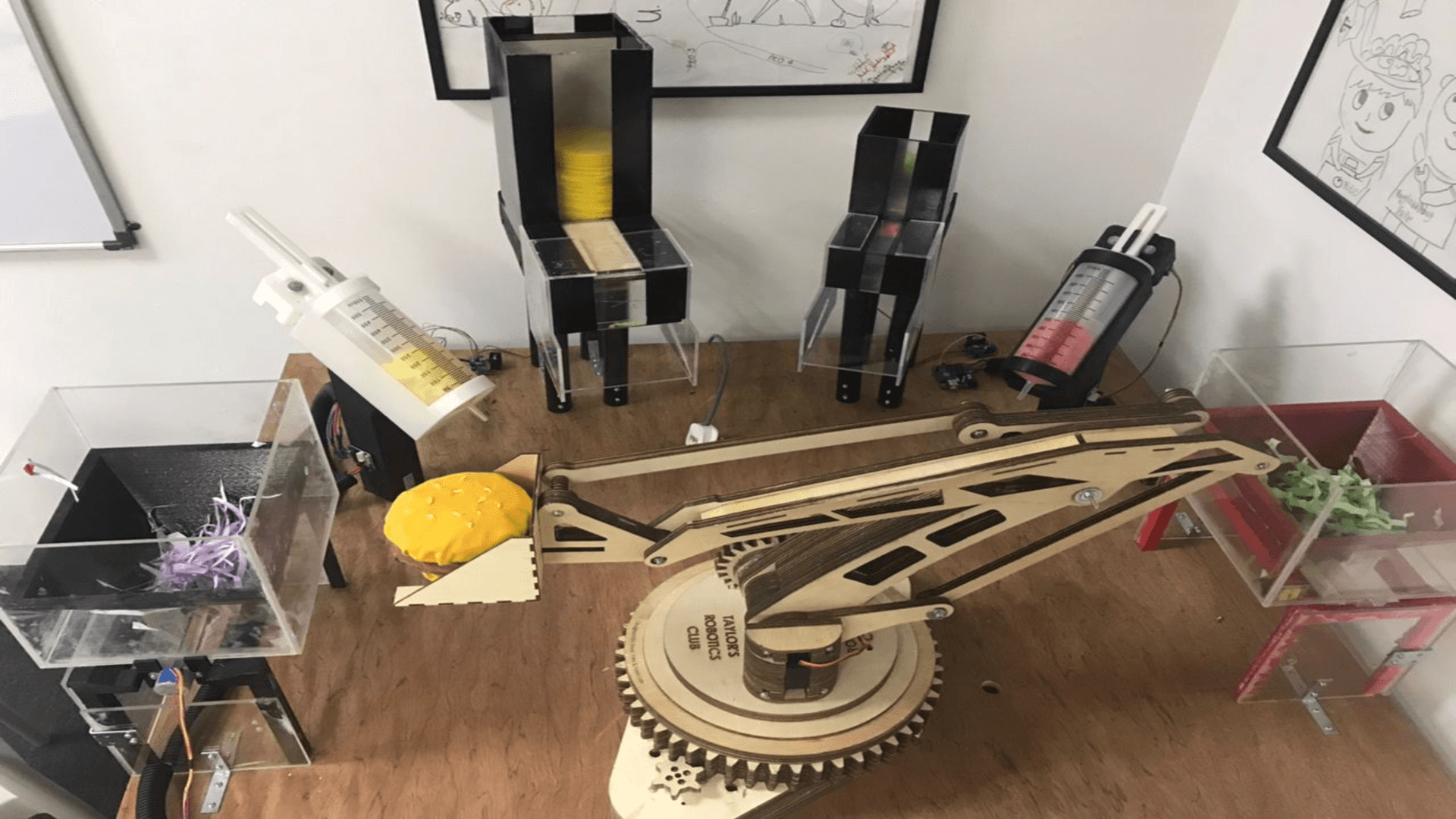
6 dedicated ingredient stations (bun, patty, sauce x2, salad x2)
Laser-cut 4-DOF robotic arm
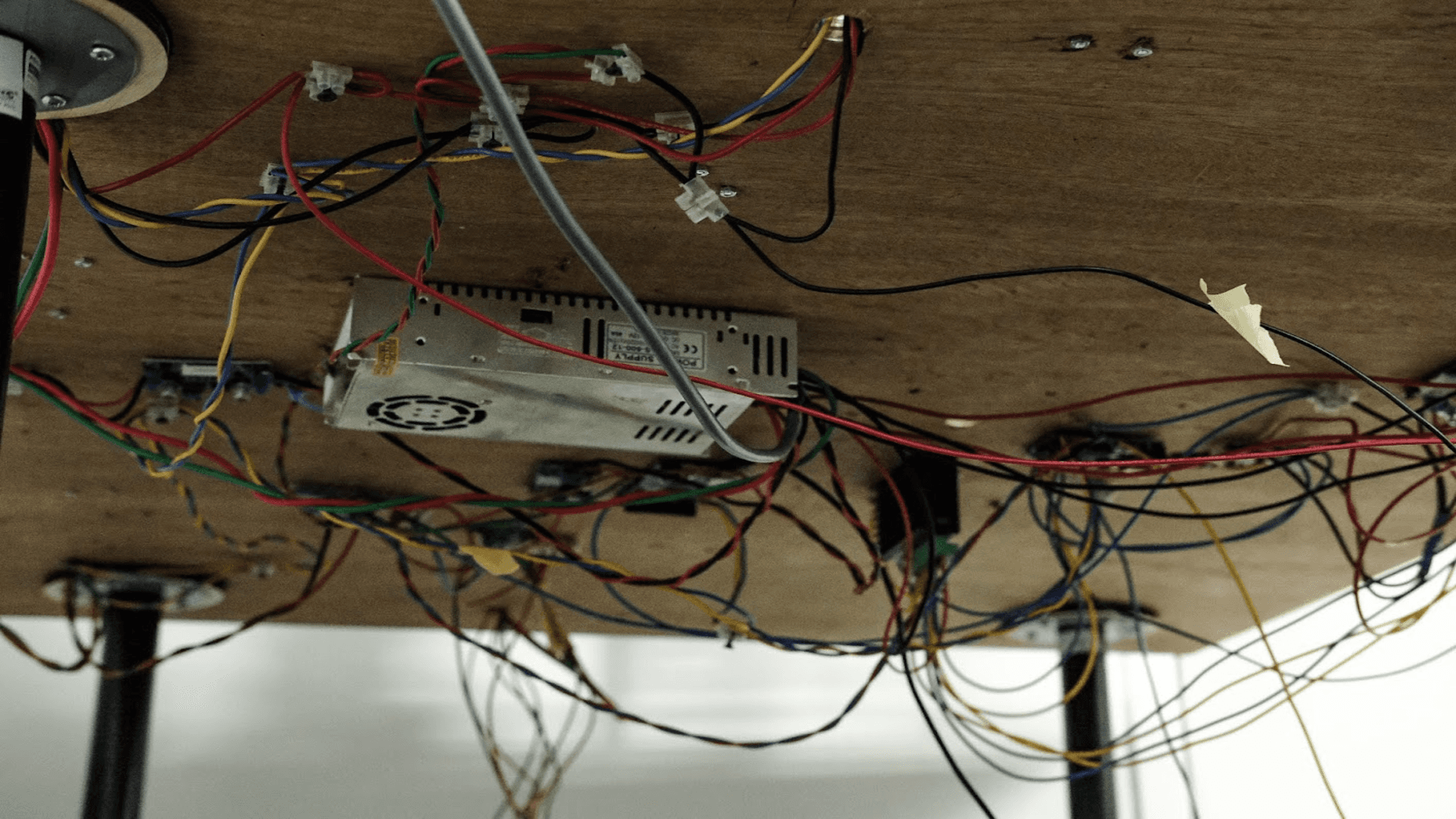
I2C communication network across all Arduino station controllers
Configurable assembly sequence supporting any ingredient combination
CHALLENGES & SOLUTIONS
I2C multi-node coordination
Designed an I2C protocol where each ingredient station runs as a slave Arduino node, with a central master Arduino issuing commands sequentially. Each node executes its action and sends an acknowledgement before the master advances to the next station, ensuring ordered and reliable assembly.
Hardcoded assembly sequence with no customisation
Rewrote the assembly sequencing codebase from a fixed routine into a configurable system that reads the customer's ingredient selections from the app and dynamically constructs the execution order, enabling any valid combination of the 5 available ingredients to be assembled correctly.
Motor timing and precision across stations
Tuned step counts and delay intervals for the 28BYJ-48 and NEMA stepper motors, and calibrated SG90 servo angles per station to achieve consistent dispensing volumes and repeatable robotic arm positioning across the full assembly cycle.